
Play Aviator Now!
Home → Strategy
Aviator Strategy
Approaching Aviator sensibly
The Spribe developer released Aviator in 2019 as a crash game with a theoretical RTP of 97.00%, establishing a house edge of exactly 3.00% over very long runs. This percentage represents the average return across hundreds of thousands of rounds, meaning players should expect to lose three euros for every hundred euros wagered in the long term. Operators may configure lower settings like 96% or 94%, which increases the house advantage and reduces potential returns for the player significantly.
Aviator features a maximum win cap of x1,000,000, allowing for substantial payouts if the multiplier rises high enough before the plane flies away. Players must cash out before this crash occurs, utilizing the auto cashout feature to secure profits at predetermined multipliers without manual intervention. This dual-bet mode enables simultaneous wagers, but the core mechanic remains a single rising multiplier that demands precise timing rather than luck-based spins.
The provably fair system uses SHA-256 cryptography combining a server seed with multiple client seeds plus a nonce to ensure transparency and fairness. Certified by iTech Labs and BMM Testlabs, these audits verify that the random number generation meets industry standards for integrity and unpredictability. Players can trust that outcomes are not manipulated, provided they understand the mathematical expectation defined by the stated RTP and house edge percentages.
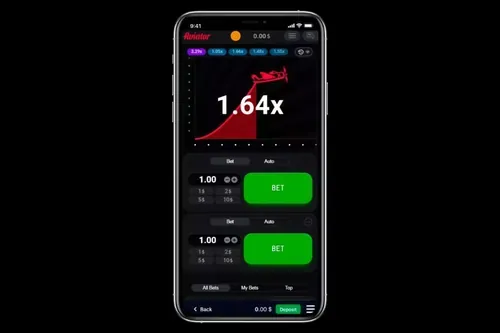
Bankroll rules that hold up
A bankroll of 300 € combined with a 100 % welcome bonus up to €2,000 provides an initial playing balance of 600 € after matching funds are applied. This total capital allows for extended session times compared to using personal funds alone, assuming the wagering requirements are met through consistent flat betting strategies. The bonus amount does not change the built-in house edge, but it extends the duration of play by increasing the available stake pool.
Wagering requirements often mandate turnover multiples such as x40, meaning a 2,000 € bonus requires 80,000 € in total bets before withdrawal eligibility is granted. Calculating this as 2,000 € x 40 reveals the massive volume of activity needed to convert promotional funds into withdrawable cash, emphasizing the importance of low-volatility approaches. Progressive staking strategies raise stakes after losses but do not alter this requirement, only accelerating the depletion of the bankroll through increased variance.
Spribe's Dice offers an adjustable volatility setting with a max win of x970, providing a contrasting risk profile against Aviator's fixed crash mechanics. While Dice allows players to tune their risk exposure, Aviator relies on the continuous rise of the multiplier until an unpredictable crash event occurs. Understanding these differences helps players allocate their bankroll more effectively between games with varying mathematical expectations and payout structures.
Free spins included in the package, such as 100 free spins, typically apply to specific slot titles rather than the instant crash game itself. These spins generate separate winnings that may be subject to different wagering terms, requiring careful tracking to avoid confusion during the conversion process. Players should verify whether winnings from free spins contribute to the main bonus turnover or require distinct conditions to become withdrawable assets.
Bet sizing against volatility
Aviator operates with a theoretical RTP of 97.00%, implying a house edge of 3.00% that remains constant regardless of the bet size chosen per round. Flat betting involves wagering the same stake every round, which minimizes variance and preserves the bankroll longer than progressive staking methods that increase exposure after losses. This strategy aligns with the mathematical expectation, ensuring that short-term results fluctuate around the mean without rapidly depleting the initial deposit.
The maximum win of x1,000,000 suggests that extremely high multipliers are possible, yet the probability of reaching such heights decreases exponentially as the multiplier rises. Players using auto cashout features can lock in smaller, more frequent wins, reducing the impact of volatile crashes that eliminate the entire stake instantly. This approach manages risk by prioritizing consistency over the rare opportunity for massive payouts, which statistically occur far less frequently than small gains.
Spribe's Dice game features an adjustable volatility parameter, allowing players to select between low-risk frequent wins and high-risk occasional large payouts. Unlike Aviator, where the crash point is determined by a hidden server seed, Dice lets users define their own risk tolerance directly within the interface. Comparing these mechanisms highlights how different game designs handle player agency and statistical distribution, influencing optimal bet sizing strategies for each title.
Provably fair verification via SHA-256 ensures that neither the operator nor the player can predict the exact moment of the crash in Aviator. This cryptographic guarantee means that no betting system can overcome the 3.00% house edge, making disciplined bankroll management the only viable long-term strategy. Players should focus on managing their stake sizes relative to their total bankroll rather than attempting to predict random crash events.
Session limits worth setting
Setting a time limit for sessions helps prevent fatigue-induced errors when playing Aviator, where split-second decisions determine whether the multiplier is cashed out successfully. A typical hour of play might involve dozens of rounds, each requiring intense focus as the plane ascends and the multiplier climbs continuously upward. Establishing a hard stop prevents emotional decision-making that often leads to chasing losses or holding onto winning positions too long.
The theoretical RTP of 97.00% indicates that over many hours of play, the expected loss equals 3% of the total amount wagered during that period. For example, wagering 1,000 € in one hour results in an expected loss of 30 €, illustrating how quickly small edges accumulate over time. Setting monetary loss limits before starting ensures that players do not exceed their predefined budget, protecting their overall financial health from inevitable variance.
Spribe's release of Aviator in 2019 introduced a new genre of instant games that demand rapid reaction times compared to traditional slots with spinning reels. The absence of paylines and symbols means players must rely solely on timing their cashout action against the rising multiplier curve. Session limits help manage the psychological pressure of this fast-paced environment, reducing the risk of impulsive bets made under stress or excitement.
The house edge of 3.00% applies uniformly across all rounds, meaning that every bet placed contributes equally to the expected long-term loss regardless of timing. By capping the number of rounds played in a session, players can control their exposure to this statistical disadvantage and preserve more of their bankroll. This disciplined approach transforms gambling from a potentially destructive habit into a controlled form of entertainment with defined boundaries and costs.
Why chasing losses fails
Chasing losses by increasing bet sizes after a crash in Aviator does not reduce the 3.00% house edge inherent in the game's mathematics. Each round is an independent event governed by the provably fair SHA-256 algorithm, meaning previous outcomes have zero influence on future results. Raising stakes to recover lost money only accelerates the depletion of the bankroll, leading to faster ruin rather than successful recovery.
The theoretical RTP of 97.00% ensures that over the long run, the casino retains 3% of all money wagered, regardless of short-term winning streaks. Progressive staking systems claim to overcome this by doubling bets after losses, but table limits and finite bankrolls make this strategy unsustainable in practice. Players who attempt to chase losses inevitably hit these barriers, resulting in significant financial damage that far exceeds their original intended losses.
Spribe's Dice game offers adjustable volatility, yet even here, increasing bet sizes after losses cannot alter the underlying mathematical expectation of the game. In Aviator, the maximum win of x1,000,000 tempts players to believe a single large multiplier can erase previous deficits, but the probability of such events is negligible. Recognizing this reality helps players accept losses as part of the entertainment cost rather than viewing them as temporary setbacks requiring immediate correction.
The certification by iTech Labs and BMM Testlabs confirms that Aviator's random number generator is unbiased and unpredictable, reinforcing the futility of trying to beat the system. No pattern exists in the crash points that can be exploited for profit, making disciplined adherence to a fixed betting strategy the only rational approach. Chasing losses ignores this fundamental truth, substituting hope for mathematical certainty and ultimately guaranteeing negative outcomes for the player.
Aviator: key facts
| Parameter | Value |
|---|---|
| Game | Aviator |
| Studio | Spribe |
| Released | 2019 |
| RTP | 97.00% |
| House edge | 3.00% |
| Max win | x1,000,000 |
Common systems and their limits
The theoretical return of Aviator stands at 97.00%, which establishes a house edge of 3.00% for the player over an extended period. This specific percentage is certified by independent testing agencies like iTech Labs and BMM Testlabs to ensure fairness in the game mechanics. Consequently, no betting strategy can overcome this built-in mathematical disadvantage in the long run regardless of the system applied. Some operators may offer lower configurations, but the standard remains fixed at this rate.
Spribe developed Aviator as a crash game where players must cash out before the multiplier ends, unlike traditional slots with reels. The maximum win potential reaches x1,000,000, offering significant upside despite the inherent volatility of the crash mechanic. Players utilizing flat betting often find their bankroll depleted faster than expected due to the continuous nature of the rounds. Understanding this limit helps manage expectations regarding potential payouts from any single session or streak.
Flat betting explained
Flat betting requires placing the same stake amount during every single round, ignoring previous outcomes or current balance fluctuations. This method preserves the bankroll longer compared to progressive strategies that increase wagers after losses or wins. Since Aviator has no spins or paylines, each round operates independently with its own provably fair algorithm result. Maintaining a constant bet size prevents rapid depletion of funds during inevitable losing streaks in the crash sequence.
Progressive staking risks
Progressive staking involves raising stakes after losses, a practice that does not alter the house edge of 3.00% established by Spribe. This approach significantly shortens the time to ruin because larger bets are required to recover previous deficits quickly. With a maximum win cap of x1,000,000, such aggressive tactics risk wiping out the entire bankroll before hitting a large multiplier. Players should recognize that this method increases variance without improving the underlying mathematical expectation of the game.
What the maths actually allows
The RTP of 97.00% means that for every 100 units wagered, the game theoretically returns 97 units over millions of rounds. This calculation assumes perfect play and infinite duration, which is impossible for any individual player experiencing finite sessions. Variance ensures that actual results will deviate significantly from this average in the short term, affecting both wins and losses. Understanding this theoretical return helps players set realistic goals rather than expecting guaranteed profits from any specific betting pattern.
Reading variance honestly
Variance in Aviator refers to the fluctuation between expected returns and actual outcomes, driven by the random crash point of each round. High volatility means that large swings in bankroll are common, requiring a substantial reserve to withstand dry spells without crashing. The provably fair mechanism using SHA-256 ensures these outcomes are unpredictable and cannot be manipulated by either party. Recognizing this randomness prevents chasing losses or assuming that past multipliers influence future rounds in any meaningful way.
Learning the game in demo first
The theoretical return to player for Aviator stands at 97.00%, a figure set by developer Spribe that defines the long-term mathematical expectation of the game. This percentage represents an average calculated over hundreds of thousands of rounds, ensuring that the house retains a fixed edge of 3.00% regardless of short-term volatility or individual session outcomes. Players should understand this baseline before engaging with real funds, as it dictates the expected loss rate over extended play periods. Operators may occasionally configure lower RTP versions, but the standard remains the primary reference for strategic planning.
Aviator operates without reels or paylines, functioning instead as a crash multiplier where a plane ascends while the potential payout increases continuously until it randomly crashes. The mechanic relies on provably fair technology using SHA-256 to combine server and client seeds, guaranteeing that each round's outcome is transparent and tamper-proof. This structure differs significantly from traditional slot games, requiring players to focus on timing their cash-out rather than analyzing symbol combinations. Understanding this unique flow is essential before transitioning from free practice modes to actual wagering scenarios.
Comparing Aviator to Tower Rush by Galaxsys highlights the variance in risk profiles, as both are instant games but differ in maximum win potential and structural complexity. While Tower Rush offers a max win of 100x, Aviator allows for wins up to x1,000,000, creating a much wider range of possible outcomes for the player. This disparity means that bankroll management strategies must be adapted to accommodate the higher stakes involved in chasing larger multipliers in Aviator. Demo mode provides a safe environment to test these differences without financial exposure.
Adjusting stakes to your budget
A common welcome offer includes a 300% bonus up to €2,000 plus 100 free spins, which can significantly extend playing time if managed correctly within the defined terms. Flat betting involves keeping the stake constant per round, such as maintaining a 1 € bet throughout a session to preserve the bankroll against the inherent 3.00% house edge. Progressive staking systems that raise bets after losses do not alter the built-in mathematical advantage and often accelerate the depletion of funds during losing streaks. Allocating a specific portion of the bonus amount to flat bets helps mitigate the risk of rapid ruin caused by emotional decision-making.
The maximum win cap of x1,000,000 sets an upper limit on potential payouts, but achieving this requires sustaining extremely high multipliers that occur infrequently in practice. Players should calculate their required turnover based on the wagering requirements attached to the bonus, ensuring that their total bets meet the threshold before withdrawal eligibility is granted. For instance, a 100 € deposit matched by a 300% bonus yields a 400 € balance; if the wagering requirement is x40, the player must generate 16,000 € in turnover. This calculation demonstrates how quickly stakes accumulate when trying to unlock bonus funds.
Using dual-bet mode allows players to split their stake across two simultaneous bets, one conservative and one aggressive, to hedge against the random nature of the crash point. By assigning smaller amounts to auto-cashout features, players can secure minor returns while letting a secondary bet run for higher multipliers. This strategy requires careful monitoring of the rising multiplier to ensure timely manual intervention if the auto-feature fails to trigger. Such tactical adjustments help maintain control over the bankroll while navigating the unpredictable ascent of the Aviator plane.
Recognising a bad session
A significant drop in account balance below the initial bankroll indicates that the session is performing worse than the theoretical 97.00% RTP would suggest over the long term. Since Aviator has no reels or spins, losses accumulate based on the frequency of early crashes that occur before the player successfully cashes out. If the balance decreases by more than 20% within the first hour of play, it signals that the current betting pattern is unsustainable given the game's volatility. Recognizing this threshold early prevents further erosion of funds due to chasing losses or ignoring statistical realities.
Provably fair verification tools allow players to audit past rounds, revealing whether the sequence of multipliers aligns with the expected distribution derived from the SHA-256 seed generation. Deviations from the average crash point may indicate temporary variance, but persistent failure to hit reasonable cash-out targets suggests flawed timing rather than system malfunction. Comparing the current session's results against the certified iTech Labs standards helps distinguish between normal statistical fluctuation and problematic play patterns. This analytical approach ensures that decisions remain grounded in data rather than emotion.
Contrasting Aviator with Tower Rush, which caps wins at 100x, reveals how different game structures impact the perception of loss during downswings. In Aviator, the potential for massive multipliers can encourage riskier behavior, leading to quicker depletion of the bankroll compared to games with stricter win limits. If a player finds themselves consistently missing cash-out opportunities just before crashes, it may indicate a need to adjust stake sizes or adopt stricter auto-cashout rules. Identifying these behavioral triggers is crucial for maintaining discipline during unfavorable sessions.
Stopping while ahead
Setting a predefined profit target, such as securing a 50% gain on the initial bankroll, provides a clear exit point before the inevitable regression toward the mean occurs. Once the target is reached, withdrawing the profits ensures that the session ends with a net positive result, protecting the gains from future losses. This disciplined approach contrasts with the temptation to reinvest winnings into higher-stakes rounds, which often leads to giving back accumulated value. Establishing a hard stop-loss limit alongside the profit goal creates a balanced framework for responsible engagement with the game mechanics.
The 3.00% house edge implies that over an infinite number of rounds, the player will always lose a small percentage of their total wagered amount. By stopping while ahead, players effectively bypass the long-term mathematical disadvantage that would otherwise erode their balance. For example, securing a 200 € profit on a 1,000 € bankroll represents a successful deviation from the expected negative outcome. This strategic withdrawal transforms a potentially losing session into a winning one, emphasizing the importance of timing in crash games.
Unlike slots that rely on spin cycles, Aviator's continuous multiplier rise creates psychological pressure to stay in the round longer for greater rewards. Resisting this urge requires adherence to pre-set cash-out points, which can be automated to remove emotional decision-making from the equation. If a player achieves a significant win early in the session, closing the application immediately preserves the capital and prevents impulsive re-entry. This habit reinforces financial discipline and reduces the likelihood of falling victim to the gambler's fallacy.
Responsible play in practice
Bankroll management begins with allocating only disposable income to gaming activities, ensuring that losses do not impact essential living expenses or financial obligations. The 300% welcome bonus up to €2,000 should be viewed as an extension of playtime rather than a guaranteed source of income, subject to strict wagering conditions. Players must verify the specific terms attached to the bonus, including any game restrictions or expiration dates, to avoid forfeiting funds through non-compliance. Treating bonuses as marketing tools helps maintain realistic expectations about potential returns.
Engaging with Aviator requires awareness of its fast-paced nature, where rounds conclude rapidly and decisions must be made under time pressure. Setting daily loss limits and time alerts helps prevent excessive play during extended sessions, reducing the risk of fatigue-induced errors. Since the game uses provably fair algorithms certified by BMM Testlabs, players can trust the integrity of the outcomes but must still manage their own behavior responsibly. Regular breaks and self-assessment checks support sustainable engagement with the platform.
Comparing Aviator's multiplayer live bet feed to solitary slot play highlights the social aspect that can influence betting decisions and increase overall activity levels. Observing other players' cash-out points may tempt individuals to mimic strategies without considering their own bankroll constraints or risk tolerance. Maintaining independent judgment and adhering to personal betting plans ensures that external influences do not compromise financial discipline. Responsible gaming practices prioritize long-term sustainability over short-term excitement.
DemoRTP & VolatilityHow to PlayAuto CashoutStrategyBonusesMobileDownload & AppMax WinSimilar GamesReviewFAQSitemap
Aviator 2026